The kitchen is often called the heart of the home, but without a systematic approach to organization, it quickly becomes the home’s most stressful zone. A poorly utilized cabinet system is not just frustrating; it actively impedes efficient cooking, leading to wasted time, duplicated purchases, and unnecessary clutter. For decades, the standard cabinetry model relied on fixed shelves—a design that inevitably created deep, dark zones where expensive cookware, forgotten ingredients, and specialized appliances went to die. Today, the modern kitchen, powered by innovative design from experts like KSI Cuisine Solutions, demands more. It requires a tailored approach where every cubic inch serves a purpose, transforming chaos into seamless culinary functionality.
This is not merely about finding a basket to put things in; it is about integrating permanent, ergonomic solutions directly into the structure of your cabinetry. We are moving beyond the rudimentary lazy Susan and stepping into the era of specialized hardware: sophisticated pull-out systems, tiered storage, hydraulic assists, and smart compartments designed specifically for the modern chef’s needs. Whether you are battling the black hole of a deep corner cabinet, struggling to stack mismatched lids, or simply searching for a way to make accessing heavy pots and pans less of a physical chore, the answer lies in customizing the interior architecture of your storage spaces.
Effective organization starts with understanding the geometry of your kitchen and acknowledging the unique demands of your cooking style. Do you entertain often? Are you a dedicated baker? Do you have an extensive collection of spices or oils? The answers dictate which specialized system—be it a customized pantry glide, a narrow vertical pull-out, or a dedicated appliance garage—will offer the highest return on investment in terms of time saved and frustration minimized. Investing in high-quality, intelligently designed kitchen cabinet organizers is perhaps the most crucial step you can take toward achieving a truly luxurious and high-performing kitchen environment. This comprehensive guide delves into the mechanical marvels and spatial strategies required to harness the full potential of your kitchen cabinetry, ensuring your space is not just beautiful on the outside, but perfectly engineered for efficiency on the inside. We will explore how different organizer types solve specific storage challenges, offering authoritative insight into selection, placement, and maximizing vertical and horizontal space to deliver unparalleled kitchen performance
Mastering the Base Cabinet: The Power of Pull-Outs and Roll-Out Shelves
Base cabinets are the workhorses of the kitchen. Positioned directly under the countertops, they house the heaviest and most frequently used items: pots, pans, mixing bowls, and small appliances. Traditionally, these cabinets utilized fixed shelving, meaning users had to kneel down, reach deep inside, and blindly feel for the required item, often resulting in items being dragged out and the interior quickly becoming disorganized. The modern solution transforms this high-value real estate through dynamic, accessible hardware.
The shift from fixed shelves to roll-out or pull-out systems represents one of the most significant advances in cabinet design ergonomics. These systems, utilizing heavy-duty slides, bring the contents of the cabinet completely outside the structure, granting 100% visibility and access without physical strain. When selecting these components, quality is paramount. Full-extension, soft-close slides rated for significant weight capacity (often 100 to 150 lbs) are essential for durability, especially when storing cast iron or multiple appliance stacks.
The Mechanics of Full-Extension Drawer Systems
While many traditional base cabinets use doors, retrofitting or designing new cabinets as deep, full-extension drawers dramatically increases usable storage. Unlike standard base cabinets where the top shelf might occupy valuable vertical space, deep drawers utilize the entire volume, often featuring adjustable heights. The key advantage of a heavy-duty drawer system is the ability to organize by function or weight. Lower drawers are perfect for heavy pots and skillet sets, while upper drawers can house medium-sized mixing bowls, baking dishes, or appliance accessories.
A critical design consideration is weight distribution and material strength. Premium cabinetry, such as that offered by KSI Cuisine Solutions, incorporates dovetail construction and robust wood or metal drawers that can withstand constant heavy use without warping or failing. The use of non-slip drawer liners is highly recommended to prevent items from shifting when the drawer is opened or closed, maintaining the internal organization structure you’ve carefully implemented. Furthermore, dedicated roll-out trays within a cabinet, accessed by opening a hinged door, offer a highly customizable solution. These often allow for vertical adjustment, enabling them to accommodate unusually tall items, like stand mixers or stockpots, that wouldn’t fit in a standard drawer depth.
Specialized Storage for Cookware and Bakeware
Pots, pans, and lids present a unique organization challenge due to their varying shapes and the perpetual struggle of stack stability. Specialized base cabinet pull-outs address this complexity directly. Vertical dividers, often constructed of chrome wire or strong wooden frames, are mounted on a pull-out shelf. These dividers allow pots to be stored vertically on their sides, rather than stacked horizontally, eliminating the ‘Jenga’ effect when retrieving the bottom pan. This system is particularly effective for storing cutting boards, baking sheets, and shallow trays, keeping them neat, separate, and instantly accessible.
Lid storage often requires dedicated attention. Solutions range from lid organizers built into the cabinet door (using hooks or small rails) to integrated slots within the pull-out system itself. The goal is two-fold: to keep the lids near their corresponding pots and pans, and to prevent them from taking up excessive, disorganized horizontal space. For high-volume cooking needs, tiered pull-out systems—where two or even three levels of shallow drawers glide out independently—are ideal for maximizing the height of very tall base cabinets, optimizing storage for items like dish towels, small baking supplies, or specialty tools.
Integrating Waste and Recycling Management
One of the most essential base cabinet organizers is the integrated waste and recycling pull-out. Moving bins out of sight and containing odors is a necessity in modern kitchen design. These systems typically utilize two or more large, heavy-duty bins mounted on a smooth, soft-close slide that hides seamlessly behind a standard cabinet door.
When designing this element, consider the volume of waste generated by the household. Systems are available with capacities ranging from small, single bins to triple configurations accommodating standard waste, recycling, and sometimes even a third bin for compost or glass. Placing this unit strategically—typically near the main prep zone or the sink—is critical for workflow efficiency. Furthermore, designers are increasingly incorporating a small storage area above the bins, sometimes a shallow utility drawer, perfect for storing trash bags, ties, or cleaning supplies, ensuring all waste-related necessities are contained within a single, highly efficient unit. This dedication to incorporating essential utilities into the cabinetry design underscores the value of sophisticated, integrated functional storage solutions](https://www.ksicabinetry.com/) over simple, stand-alone bins.
Conquering Corner Chaos: magic corner units and Lazy Susans
Corner cabinets have historically been the most frustrating, least accessible spaces in any kitchen layout. Their depth and inconvenient entrance angle create vast zones of unusable or difficult-to-reach storage, affectionately dubbed “corner chaos.” However, technological advancements in hardware and sophisticated mechanical solutions have transformed these formerly dead spaces into some of the most efficient storage areas in the entire kitchen.
The choice between a Lazy Susan and a highly engineered corner mechanism depends on budget, required accessibility, and the type of items being stored. Both aim to maximize the usable square footage of the corner, but they achieve this through vastly different mechanical approaches. Understanding the nuances of each system is key to selecting the appropriate functional storage solutions for this critical area.
The Evolution of the Lazy Susan
The Lazy Susan is the classic corner solution, relying on rotating shelves to bring items from the back of the cabinet to the front. While basic models consist of simple round or D-shaped plastic trays, modern versions are far more robust and versatile. Premium Lazy Susans often feature:
1. Kidney-Shaped or Pie-Cut Designs: These shapes integrate better with the cabinet opening, maximizing storage space compared to traditional circular trays, and often feature solid wood or high-grade polymer construction.
2. Independent Rotation: Higher-end models allow the two shelves to rotate independently, meaning you don’t have to move the items on the top shelf just to access the bottom.
3. Adjustable Height: Modern hardware allows users to adjust the height of the shelves after installation, which is crucial for accommodating tall items like blenders, large serving pitchers, or oversized specialty dishes.
Lazy Susans are excellent for lighter items that need quick access, such as small appliances, canned goods, or frequently used baking ingredients. They are generally the most cost-effective and simplest corner solution to install and maintain, providing immediate, rotational access to all contents within the specified vertical clearance.
Unleashing the Potential of the Magic Corner Units
For those requiring maximum accessibility for heavier cookware and a sleek, sophisticated mechanical operation, nothing surpasses the engineering brilliance of magic corner units. These mechanisms are the pinnacle of corner cabinet optimization, converting deep, awkward spaces into highly organized, fully accessible storage zones.
magic corner units operate using complex articulated hardware that, when the cabinet door is pulled open, first brings the interior shelves forward and then slides the back shelves smoothly into the open cabinet space. This two-stage motion ensures that 100% of the stored items are presented outside the cabinet box. The benefits include:
* High Load Capacity: Designed to hold heavy items, such as small slow-cookers, sets of Dutch ovens, or specialized mixing bowls.
* Total Access: Unlike a Lazy Susan where a portion of the shelf is always hidden, a magic corner unit provides complete visibility and accessibility to every item.
* Elegant Movement: Premium systems feature soft-close mechanisms, ensuring the substantial weight moves smoothly and quietly back into the cabinet structure, protecting both the hardware and the cabinet contents.
While magic corner units represent a higher initial investment compared to simple rotating shelves, the unparalleled efficiency and enhanced storage capacity they provide often make them indispensable for serious home cooks and large family kitchens where every inch of premium space must be maximized.
Addressing Blind Corners with Swing-Out Systems
Blind corner cabinets—where the storage area extends into the cabinet run but is only accessible via a single door opening perpendicular to the storage space—present a different set of challenges. When a full Magic Corner system is not feasible, often due to plumbing or structural limitations, swing-out systems offer a superb compromise.
These systems typically feature two large shelves or baskets. When the door is opened, the front basket swings completely out and away from the cabinet opening, allowing the second, deeper basket to slide forward into the vacated space. This clever design maximizes the use of the typically inaccessible rear area of the cabinet. They are particularly effective for bulky items that don’t need daily access but require clear visibility when retrieved, such as seasonal serving ware, holiday platters, or seldom-used specialty appliances. By intelligently converting the dead zones of the kitchen into active, usable space, these specialized kitchen cabinet organizers significantly contribute to a streamlined and functional kitchen environment.
Drawer Domination: Utilizing deep drawer dividers for Utensils and Cookware
Drawers are fundamentally more accessible than cabinets, offering a top-down view of contents without requiring the user to bend down or reach deep. However, a deep drawer, if left undivided, can quickly devolve into a chaotic stack of mismatched items. The true potential of deep storage is unlocked only through thoughtful, robust internal organization systems designed to compartmentalize and dedicate specific homes for every item. This is where the strategic use of dividers elevates simple storage into a bespoke, organizational marvel.
The trend has shifted away from narrow, shallow utensil drawers toward fewer, deeper drawers designed to hold everything from spice containers and cutlery to large cookware sets. This consolidation requires flexible, adjustable interior systems that can adapt as cooking habits or inventory changes.
Customizing Cutlery and Utensil Organization
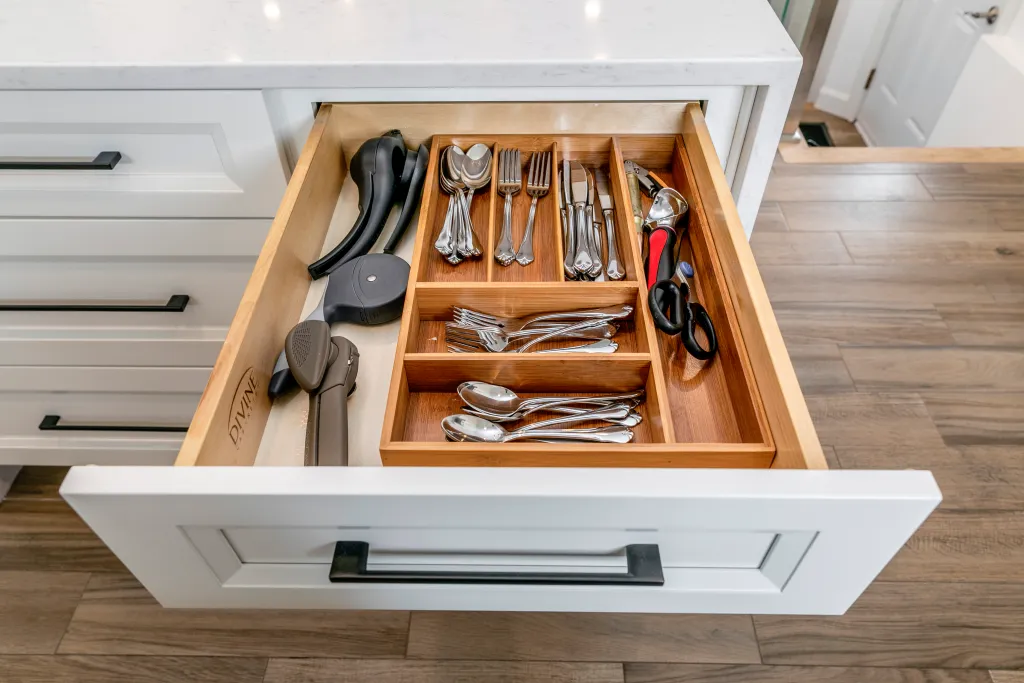
While standard silverware trays are common, modern solutions utilize the full depth and width of the drawer space. Vertical stacking systems are particularly efficient, allowing flatware to be stored at an angle, thus fitting nearly double the capacity into the same linear space. For specialized utensils—whisks, spatulas, serving spoons—adjustable deep drawer dividers are essential. These dividers are typically spring-loaded or feature magnetic attachments, allowing the user to customize the width and length of compartments to perfectly match the length of the utensils.
KSI Cuisine Solutions emphasizes the use of high-quality materials for drawer inserts. Bamboo, solid hardwood, or finely crafted metal inserts not only look aesthetically superior but also prevent the contents from shifting and scratching the drawer bottom. Furthermore, dedicated spaces for specialty tools—such as knife block inserts that are safely secured inside the drawer—eliminate countertop clutter while preserving blade sharpness and ensuring safety.
Heavy-Duty Dividers for Pots, Pans, and Lids
The most significant advantage of using deep drawer dividers is in the storage of heavy cookware. Instead of stacking nested pans, which requires lifting and separating the stack every time a mid-level item is needed, these drawers are organized vertically.
The dividers used for pots and pans must be sturdy, often made of thick metal or highly durable wood. They serve two primary functions:
1. Separation: They keep large frying pans and saucepans standing upright, preventing them from sliding or tipping over when the drawer is opened or closed.
2. Lid Management: Many specialized systems incorporate narrow vertical slots immediately adjacent to the pot storage area, allowing the corresponding lids to be stored vertically alongside the cookware. This system transforms the retrieval process—the chef pulls out the drawer and immediately sees the required pan and its correct lid, all without having to dig or unstack.
For items like baking dishes or casserole containers, which may be different sizes but similar shapes, adjustable deep drawer dividers allow for custom-sized compartments, ensuring that the heavy stoneware is safely nested without rattling or shifting. This precision organization is key to maintaining a quiet and efficient kitchen environment.
The Rise of Charging Drawers and Specialized Utility
Beyond traditional cutlery and cookware, deep drawers are increasingly used to house specialized utility components. The rise of integrated charging drawers is a perfect example of advanced kitchen cabinet organizers. These drawers incorporate internal power outlets, allowing devices (phones, tablets, portable vacuums, etc.) to be charged and stored neatly out of sight, reducing cord clutter on countertops. Safety features, such as interlocks that kill power if the drawer overheats or is fully closed, are standard in high-quality installations.
Similarly, specific deep drawers can be dedicated to appliance garages. Instead of lifting a heavy stand mixer from a corner, it can be stored directly within a deep drawer. Utilizing an integrated lift mechanism—a specialized piece of hardware—the heavy appliance can be gently raised to counter height for use, and then easily lowered back into storage. These highly customized systems demonstrate that sophisticated organization is not just about maximizing space, but about optimizing the ergonomic interaction between the user and their tools, delivering truly superior functional storage solutions.
Wall Cabinet Wizardry: Vertical Storage and Specialized Solutions
Wall cabinets, or upper cabinets, are primarily used for items that require immediate, eye-level access: dishes, glasses, spices, and frequently used food items. Since these cabinets are constrained by height and depth (typically 12–15 inches deep), organization hacks must focus on maximizing vertical space and simplifying access without requiring a step stool. The challenge here is ensuring that items placed high up or toward the back are not forgotten or difficult to retrieve.
Modern wall cabinet design incorporates several innovative technologies aimed at solving these limitations, moving far beyond the simple fixed shelf to utilize verticality and mechanical assistance.
Vertical Dividers for Dishware and Glassware
Standard stacking of plates and bowls can lead to heavy piles that are cumbersome to lift, especially for those with mobility issues or those storing large quantities of stoneware. Vertical dividers, similar to those used in base cabinets, can be highly effective in wall cabinets.
* Plate Racks: Integrated plate racks, often featuring peg systems or deep slots, allow plates to be stored vertically, simplifying retrieval and minimizing the risk of chipping. This method also allows dishes to air dry immediately after being put away, if they are placed near the sink area.
* Tiered Shelving: For glasses and mugs, tiered, stadium-style organizers are crucial. These risers elevate the back row of items, ensuring that even the most frequently used items are visible and accessible without reaching behind a wall of glassware.
* Stemware Racks: Under-shelf or integrated stemware racks keep wine glasses safe, dust-free, and accessible. They utilize the often-wasted space beneath the lowest shelf or the highest interior space of the cabinet.
Advanced Mechanical Access: Pull-Down and Adjustable Shelves
The greatest barrier to using the highest shelves in a wall cabinet is accessibility. Traditional design renders this space only usable via a step stool, which poses safety concerns and hinders efficiency. High-tech wall cabinets now feature sophisticated mechanical solutions to overcome height limitations.
* Pull-Down Shelving Systems: These systems, activated by a slight pull on a handle, use a hydraulic or spring mechanism to smoothly bring the entire contents of the shelf down and slightly out of the cabinet opening. Once the items are accessed, the shelf easily glides back into its recessed position. These are ideal for heavy items that must be stored high up, such as bulk baking supplies or lesser-used appliances.
* Adjustable Shelving: While standard shelves are adjustable, the concept of micro-adjustments allows for true customization. Instead of large, predefined hole increments, many contemporary cabinet systems utilize continuous track systems, allowing shelves to be moved up or down in precise increments (e.g., 1/4 inch), ensuring maximum utilization of every inch of vertical space, especially when dealing with slightly taller-than-average spice jars or cereal boxes.
Narrow Wall Cabinet Integration and Appliance Garages
Wall cabinets do not always have to be wide. Narrow vertical cabinets, typically 6 to 9 inches wide, can be installed between larger units or at the end of a cabinet run. When optimized with vertical kitchen cabinet organizers, these narrow spaces become ideal for storing cooking oils, vinegars, and baking extracts. They can be utilized as small, dedicated pull-out systems, offering easy, front-facing access to slim bottles and eliminating the need to search through a deep cabinet.
Another specialized wall cabinet solution is the countertop appliance garage. While often resting on the counter, the structure is technically integrated into the wall cabinetry above it. This solution features a simple lift-up, tambour, or rolling door that conceals small appliances (toasters, blenders, coffee makers) when they are not in use. This maintains clean, uncluttered counter space while keeping essential, daily-use items immediately available. This design is crucial for achieving a sleek, minimalist aesthetic while retaining high functionality, proving that the best functional storage solutions often involve concealment.
The Essential Detail: Streamlining Pantry and Small Item Storage (The Power of the spice rack pull-out)
The organization of small, numerous items—spices, oils, cleaning supplies, and packaged goods—is critical to preventing organizational breakdown in a high-performing kitchen. These items, due to their size and quantity, are the primary sources of clutter when they lack dedicated, easily accessible storage. The pantry, whether a walk-in room or a dedicated cabinet tower, requires a hierarchical structure to maximize efficiency, prioritizing visibility and accessibility across all three spatial dimensions: height, depth, and width.
Designing the Ultimate Pantry Cabinet
A cabinet-style pantry must overcome its inherent depth to be functional. Fixed shelving in a deep pantry cabinet results in a “tunnel effect,” where items placed behind the front row are forgotten and expire. The solutions involve converting static space into dynamic space using full-extension pull-outs.
* Roll-Out Trays: A series of heavy-duty, adjustable roll-out trays mounted inside the pantry cabinet ensures every item can be viewed and accessed from the side. Unlike fixed shelves, these pull-out trays prevent items from being stored two or three deep.
* Door Storage: Utilize the interior surface of the pantry door for thin items. Shallow, full-length organizers or racks are perfect for storing foil, plastic wrap, bags, small jars, or frequently used oils, maximizing the usable square footage.
* Integrated Drawers: For heavy, bulk items (e.g., flour, sugar, potatoes), the bottom section of the pantry is best utilized with deep drawers, allowing heavy containers to be easily pulled out for scooping without strain.
The Specialization of the spice rack pull-out
Spices are one of the most misused items in the average kitchen. They are often stored in deep cabinets, leading to a constant search, or kept on countertops, where they are exposed to light and heat, reducing their potency. The dedicated spice rack pull-out is a specific, narrow vertical storage solution designed to solve these issues precisely.
A spice rack pull-out is typically a narrow cabinet (3 to 6 inches wide) situated immediately adjacent to the primary cooking range or prep area. It consists of multiple tiered shelves or racks mounted on a single, full-extension, heavy-duty slide. When pulled out, every spice jar is instantly visible and accessible from both sides. Key features include:
* Vertical Storage: Eliminates stacking and ensures immediate identification of every jar.
* Proximity: Placing the spice rack pull-out close to the stove ensures optimal workflow, minimizing movement during cooking.
* Safety Rails: High-quality systems include safety rails or non-slip liners to prevent small, round jars from tipping or falling when the unit is opened or closed.
This specialization contrasts sharply with traditional storage methods, proving that dedicated kitchen cabinet organizers significantly improve cooking flow and organization maintenance.
Under-Sink and Cleaning Supply Optimization
The area beneath the kitchen sink often becomes a dumping ground for cleaning supplies, sponges, and dish soap. This space is complicated by plumbing, requiring creative organizational solutions that work around pipes and garbage disposal units.
* U-Shaped Pull-Outs: Specialized U-shaped or C-shaped pull-out trays are designed to fit around existing plumbing. These maximize the usable horizontal space, often offering two levels of storage for sprays, bottles, and cleaning tools, bringing them out entirely for easy access.
* Door-Mounted Bins: Small bins or caddies attached to the inside of the sink cabinet doors are perfect for housing sponges, gloves, and small rags, keeping these items off the floor of the cabinet and immediately visible upon opening the door.
* Sliding Caddies: Portable caddies filled with frequently used cleaning items can be slid into the under-sink space. When needed, the entire caddy can be lifted out and carried to the area being cleaned, simplifying both storage and task execution. These smart internal additions ensure that even the most awkward areas contribute meaningfully to the kitchen’s comprehensive set of functional storage solutions.
The Investment in Efficiency: Choosing the Right functional storage solutions for Longevity
When selecting internal functional storage solutions for a new or renovated kitchen, the focus must shift from temporary fixes to durable, integrated systems. The initial cost difference between high-quality, specialized hardware and generic, low-grade organizers is significant, but the long-term return on investment—in terms of reliability, increased efficiency, and reduced frustration—is immeasurable. A well-designed kitchen, incorporating premium kitchen cabinet organizers, is an investment that enhances home value and improves daily quality of life.
The decision-making process should prioritize material science, hardware performance, and adherence to ergonomic principles.
Material Matters: Durability and Aesthetics
The materials used in modern organizers must withstand heavy loads, frequent movement, and the damp, abrasive environment often found near sinks and stoves.
* Hardware and Slides: The mechanisms behind pull-outs (slides, hinges, articulation joints) are the most critical component. Opt exclusively for full-extension, soft-close hardware from reputable brands, often rated for 100 lbs or more. Zinc-plated or stainless steel slides offer superior corrosion resistance and longevity. The “soft-close” feature, which gently draws the drawer or mechanism closed, prevents slamming, protecting the cabinet structure, the contents, and the hardware itself.
* Cabinet Inserts: For inserts and dividers, the choice often falls between solid wood (maple or birch), high-grade metal (chrome or stainless steel wire), or heavy-duty polymer. Solid wood dividers offer a luxurious feel and are highly durable, especially when sealed correctly. Wire organizers provide maximum visibility and airflow, which is ideal for items like root vegetables or cleaning supplies, but must be thick gauge to prevent bending. Cheap plastic should be avoided, as it cracks easily and harbors bacteria.
Ergonomics in Kitchen Design
A truly functional kitchen adheres to the principle of “zoning,” where items are stored based on their proximity to the area of use. Premium organization systems support this by ensuring that all items related to a specific task are stored together and are easy to retrieve.
| Kitchen Zone | Primary Task | Ideal Organizer Solution | Ergonomic Benefit |
| Cooking Zone | Prep, Sautéing, Frying | Spice rack pull-out, Vertical Pot/Lid Dividers, Oil/Vinegar Pull-outs | Minimum travel distance; instant visibility of tools. |
| Cleaning Zone | Dishwashing, Waste Disposal | U-Shaped Under-Sink Pull-Outs, Integrated Waste Bins | Hides mess; provides quick access to chemicals while containing spillage. |
| Pantry Zone | Bulk Storage, Dry Goods | Full-Extension Roll-Out Trays, Door Storage Racks | Eliminates forgotten items; minimizes stacking and searching. |
| Corner Zone | Heavy, Less Frequent Use | magic corner units, Heavy-Duty Lazy Susans | Converts unusable deep space into accessible, high-capacity storage. |
Assessing Long-Term Value and Customization
While off-the-shelf organizers can offer quick fixes, the greatest value is realized through customized, built-in deep drawer dividers and shelving systems that are specifically sized and calibrated for the user’s inventory and workflow. When planning a kitchen with KSI Cuisine Solutions, emphasis is placed on fully integrated systems that are installed during the cabinet manufacturing process. This ensures perfect fit, seamless aesthetics, and maximum structural integrity.
Consider future needs: If your family size or cooking style changes, can the organizers adapt? Modular systems, such as adjustable peg-boards for drawers or removable vertical dividers, offer the flexibility to reconfigure storage layouts without requiring a costly overhaul. Choosing providers who stand behind their hardware with robust warranties confirms the investment in long-term efficiency and reliability. The integration of high-end functional storage solutions is the difference between a simply beautiful kitchen and a truly high-performing culinary environment.
Comprehensive Comparison of Advanced Cabinet Organizer Systems
Choosing the right system requires balancing cost, installation complexity, and the type of accessibility needed for specific kitchen zones. This table compares the most popular advanced organizational hardware options available today.
| Organizer Type | Primary Function | Ideal Placement | Key Advantage | Cost/Complexity |
| Full-Extension Roll-Out Shelves | Accessing deep contents; heavy item storage. | Base Cabinets, Pantry Towers | Brings 100% of contents out for full visibility. | Low to Moderate |
| magic corner units | Utilizing deep, inaccessible corner space. | Blind or L-Shaped Corner Cabinets | Mechanical articulation provides total access to corner area. | High |
| Dedicated spice rack pull-out | Organizing small jars and bottles. | Next to range/prep area (Narrow 3-6″ cabinet). | Highly specialized; instant visibility from both sides. | Moderate |
| Appliance Lift Mechanism | Storing and accessing heavy stand mixers/blenders. | Deep Base Cabinet | Effortlessly raises heavy items to counter level for use. | High |
| deep drawer dividers (Vertical) | Separating pots, pans, lids, and cutting boards. | Deep Drawers | Eliminates stacking; maintains quiet, vertical organization. | Moderate |
| Pull-Down Wall Shelving | Accessing items stored on high shelves. | Upper Wall Cabinets | Hydraulically lowers contents to counter level. | High |
| U-Shaped Under-Sink Pull-Out | Organizing cleaning supplies around plumbing. | Sink Base Cabinet | Maximizes space around obstructions; contains potential spills. | Moderate |
Designing the Future of Kitchen Efficiency
The contemporary kitchen demands more than just aesthetic appeal; it requires engineering focused on efficiency, ergonomics, and seamless workflow. The era of the frustrating, fixed-shelf cabinet is over. By strategically incorporating sophisticated kitchen cabinet organizers, such as roll-out shelving, advanced corner solutions, and custom-fit dividers, homeowners can fundamentally transform their culinary experience.
Whether you are implementing magic corner units to conquer dead zones, installing robust deep drawer dividers for vertical pan storage, or utilizing a specialized spice rack pull-out to streamline meal preparation, the investment is in both time saved and frustration eliminated. KSI Cuisine Solutions specializes in integrating these high-performance functional storage solutions directly into your custom cabinetry, ensuring that every element—from the construction material to the soft-close hardware—contributes to a kitchen that is not only beautiful but intuitively organized and built to last.
Ready to unlock the full potential of your kitchen and design a space where everything is precisely where it should be? Contact the design experts at KSI Cuisine Solutions today to explore how our specialized cabinetry and organizational systems can bring unparalleled efficiency to your home.

Maximize Kitchen Space: The Ultimate Guide to Intelligent kitchen cabinet organizers
The kitchen is often called the heart of the home, but without a systematic approach to organization, it quickly becomes […]

Two-Tone Kitchens: Mastering the Art of Mixing Cabinet Colors for Timeless Design in 2026
The kitchen has long ceased to be merely a functional space; it is the emotional and architectural centerpiece of the […]

The Ultimate Cabinet Showdown: Solid Wood vs. MDF for Your Kitchen Cabinets Montreal
Renovating a kitchen is one of the most significant investments a homeowner can make. While aesthetics often drive initial choices—the […]