
How to Choose the Right Countertop for Your Kitchen: Quartz, Granite, or Laminate?
Choosing the right countertop for your kitchen is a major decision. Not only does the surface you pick impact the look and feel of your space, but it also affects durability, maintenance, cost, and resale value. In this article we’ll compare three of the most popular countertop materials—quartz, granite, and laminate—so you can make an informed decision that fits your lifestyle, budget, and long-term goals.
We’ll cover:
- What each material is and how it’s made
- Pros and cons (durability, maintenance, aesthetics)
- Cost and value considerations
- Which material is best for different homeowner needs
- How to choose based on your own kitchen use, budget and design style
By the end, you’ll have a clearer roadmap to choosing the right surface for your kitchen.
How to Choose the Right Countertop for Your Kitchen: Quartz, Granite, or Laminate?
What Are the Materials?
Quartz

Quartz countertops are made from crushed natural quartz combined with resins and pigments to form engineered stone. Because of the manufacturing process, quartz is non-porous, consistent in pattern, and does not generally require sealing. This engineered nature gives it a broad palette of colours and styles, often mimicking marble or other stone.
Granite
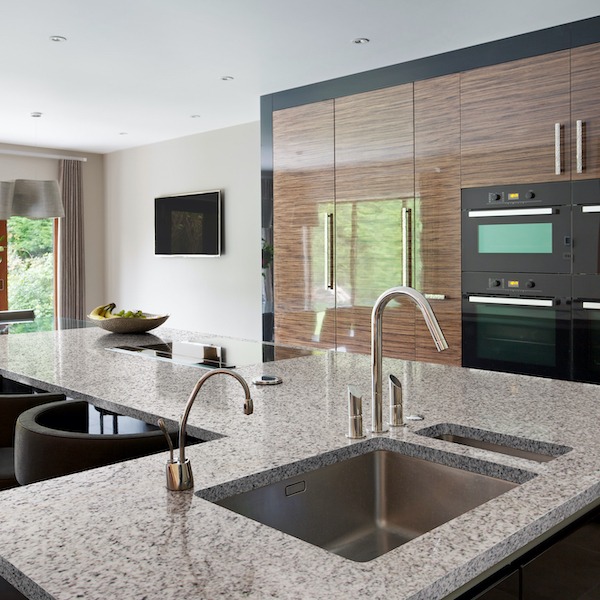
Granite is a natural igneous stone quarried from the earth, cut into slabs, polished and installed as kitchen countertops. Because each slab is cut from the rock, no two are exactly alike—giving a unique, natural aesthetic. Granite is naturally heat and scratch resistant but because it is porous, it does require periodic sealing.
Laminate
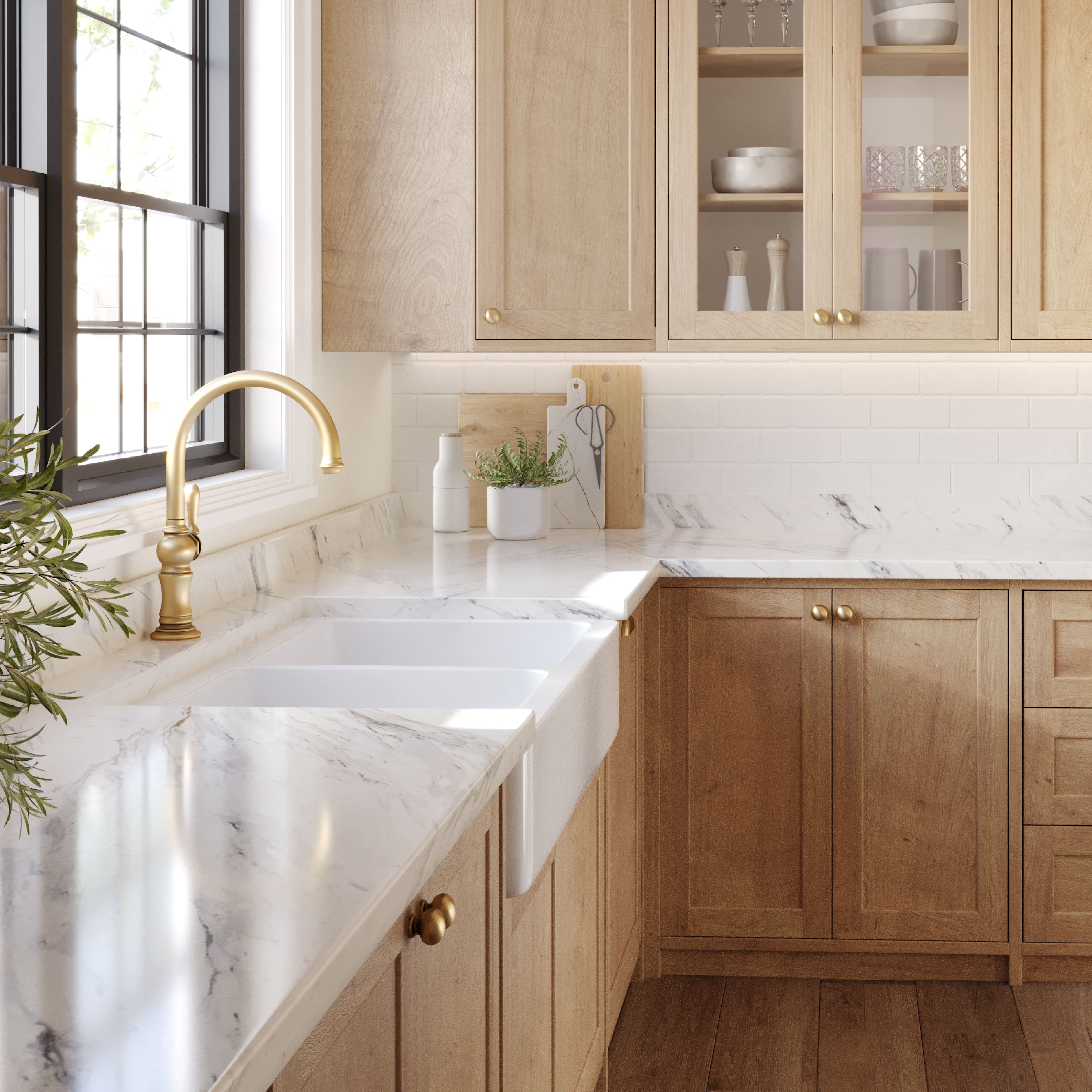
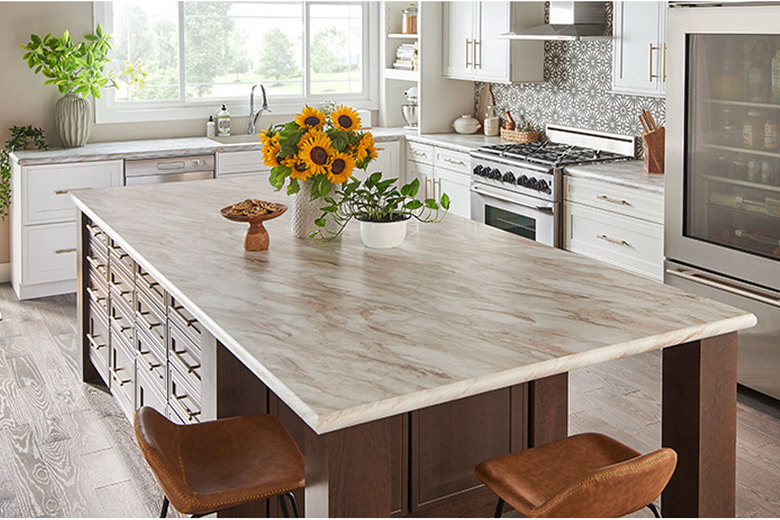
Laminate countertops consist of a particle-board or MDF substrate with a laminate sheet (made of paper or kraft layers, resins) adhered on top. They are typically the most affordable option. But they lack the high‐end durability and premium look of stone surfaces.ional customer service to ensure your dream kitchen becomes a reality.
Material Comparison: Pros & Cons
Durability & Maintenance
Quartz
- Non-porous, so resists stains and bacterial growth better.
- Very durable in everyday use—scratch resistant etc.
- An important caveat: while quartz is durable, it is less heat resistant than some natural stones. You should still use hot pads or trivets.
- Doesn’t require yearly sealing like granite.
Granite
- Extremely durable; natural stone offers excellent resistance to heat and wear.
- Because it is porous, it must be sealed (often annually) to prevent stains and liquid penetration.
- Edge chipping, cracking is possible (especially if heavy impact). Some reddit users mention that granite “can crack if exposed to high heat.”
Laminate
- Good for lightweight, low budget use.
- But vulnerable: heat can damage it (hot pan may burn or warp laminate). Moisture can seep in and damage the substrate.
- Scratch / wear layer is thin; once damaged repairing is difficult.
- May have shorter lifespan compared to stone.
Appearance & Design Flexibility
Quartz
- Engineered manufacturing allows a wide variety of colours, patterns, finishes—can mimic marble veining, bold colours or classic neutrals.
- Consistent appearance slab-to-slab (which helps if you have a large kitchen or island).
- If you like very natural variation (veins, unique patterns) you might prefer stone.
Granite
- Each slab is unique—natural variations, mineral flecks, and veining create character.
- If your design goal is “one-of-a-kind”, granite is strong.
- However, fewer colour choices compared to quartz’s manufactured palette.
Laminate
- Highest variety of colour/pattern because the surface is printed/manufactured. You can get very bold colours or mimic wood/stone.
- But the feel and depth of real stone is hard to replicate; some users say “laminate will look like crap in 5-10 years”. > “Quartz will last. Laminate will look like crap in 5-10 years. Quartz is something you are investing in for the future.”
Cost & Resale Value
Quartz
- Mid-to-high cost option. Often seen as a premium upgrade.
- Because it’s low-maintenance, good resale value.
Granite
- Cost varies widely depending on rarity, colour, slab size, and installation complexity. Could exceed quartz in some cases.
- Also adds value to a home (stone-finish premium).
Laminate
- Affordable and budget-friendly.
- But lower resale value; sometimes seen as dated or less desirable by buyers.
Environmental & Practical Considerations
- Weight & structural support: Granite and quartz are heavy slabs (e.g., quartz slabs ~20-25 lb/ft² vs laminate ~2-3 lb/ft²). If your cabinets or floor structure are lightweight, you may need to check support.
- Installation: Stone and engineered stone usually require professional installation; mistakes can be costly. Laminate has DIY-friendly options.
- Outdoor use / UV exposure: Some materials don’t handle UV well (engineered resin in quartz can fade outdoors) so if you have an outdoor kitchen you might need to verify suitability.
Which One Should You Choose? (based on your needs)
Here are questions to ask and how each material stacks up.
1. What’s your budget?
- If budget is tight → Laminate is most affordable.
- If budget allows and you want longevity and design upgrade → Quartz or Granite.
- If you want premium but also one-of-a-kind natural look → Granite (depending on slab).
2. How much maintenance are you willing to do?
- Want low-maintenance (no sealing) → Quartz is best.
- Willing to reseal annually and treat with care → Granite works.
- Want minimal initial cost but ok with potential replacement sooner → Laminate.
3. How heavy is your kitchen use? (cooking, kids, entertaining)
- High traffic, spills, kids, heavy cooking → Quartz or Granite (stone surfaces more durable).
- Light use, secondary kitchen/basement bar → Laminate can be okay.
- Real heat exposure (pots off stove) → Granite has edge for heat resistance.
4. What look do you want?
- Want broad colour/pattern variety, consistent look → Quartz.
- Want natural, unique stone veining and character → Granite.
- Need a lot of colour/design flexibility on tight budget → Laminate.
- Also consider long term resale: stone typically adds perceived value.
5. How long do you plan to stay in the home or resale value?
- Staying long-term and want durable, timeless surface → invest in Quartz or Granite.
- Short term, or budget for now and upgrade later → Laminate may suffice.
- If resale possible in near future: stone counters usually more appealing to buyers.
Practical Tips for Choosing & Installing
- Always view full slabs in person; lighting affects colour and veining.
- For stone (granite): ask about grade, origin, sealing requirement, edge treatment, slab thickness.
- For quartz: check manufacturer warranty, UV suitability (especially near windows/outdoors), look for quality finish.
- For laminate: inspect edge finish, substrate quality (particle board vs plywood), seams, how surface will wear over time.
- Measure accurately: layout kitchens, consider overhangs, appliance cut-outs, seams.
- Factor in installation cost: heavy slabs require thicker support, careful transport, professional labor.
- Ask about maintenance requirements: cleaning products, sealing interval, recommendations from fabricator.
- Protect your investment: use trivets under hot pots, cutting boards (even though stone is durable, all surfaces benefit from care).
- Think about coordination: the countertop will dominate the look. Consider cabinetry, backsplash, flooring, lighting.
Quick Comparison Table
| Feature | Quartz | Granite | Laminate |
|---|---|---|---|
| Maintenance | Low (no sealing) | Medium (requires sealing) | Very low initial, but shorter lifespan |
| Durability | High, stain-resistant | Very high, great heat resistance | Lower: easily scratched, heat/moisture vulnerable |
| Cost | Mid-to-High | Mid-to-High (can be higher) | Low |
| Resale Value | Strong | Strong | Lower |
| Design Options | Very broad, consistent | Unique slab patterns | Broad palette, but less premium feel |
| Heat Resistance | Good, but less than granite | Excellent | Poor |
| Ideal Use | High-traffic kitchens, long-term investment | Premium natural stone look, durable cooking zone | Secondary kitchen, budget renovation |
Common Mistakes to Avoid
- Choosing purely on price without considering long-term value and maintenance.
- Picking a slab based on small sample only—custom lighting, slab variation matter.
- Forgetting to account for installation complexity/cost (especially heavy stone slabs).
- Ignoring substrate or cabinet strength when switching to heavier materials.
- Using cheap or improper cleaning products that damage the surface.
- Failing to ask about warranty, sealing frequency (for granite), UV resistance (for quartz).
- Overlooking seam placement; visible seams or joins can affect visual quality.
- Not planning layout early: cut-outs for sinks/appliances, joints, edge finishes.
Case Scenarios: Which to Pick?
- Scenario A: You have a busy family kitchen; lots of cooking, kids around, entertaining friends. You live in the house for many years, resale might happen later.
→ Best choice: Quartz (for low maintenance + durability) or Granite (if you love natural stone and OK with sealing). - Scenario B: You have a limited budget, this is a rental property or you plan to move soon, want a fresh look now but don’t need ultra-premium durability.
→ Best choice: Laminate (budget friendly) with the understanding you may upgrade later. - Scenario C: You prioritize luxury finish, natural stone look, unique slab patterns, and you want a “wow” factor. You also are OK with spending more and doing maintenance.
→ Best choice: Granite. - Scenario D: You plan an outdoor kitchen or semi-outdoor space; careful about UV, heat, moisture.
→ Consider: Verify whether quartz is suitable outdoors (some resins fade), or pick a stone suited for exterior conditions.
Conclusion
Choosing the right countertop material for your kitchen is about balancing budget, maintenance, durability, style, and future value. Each of the three materials—quartz, granite, and laminate—has its strengths and trade-offs:
- Quartz offers a strong overall package: durable, low-maintenance, wide design options.
- Granite delivers natural beauty and premium feel, with excellent heat resistance—but it comes with higher maintenance (sealing) and cost variability.
- Laminate gives you budget freedom and design flexibility but sacrifices longevity and premium value.
To make the right choice, reflect on how you use your kitchen, how long you plan to stay, your renovation budget, and how much maintenance you’re willing to do. Also, always inspect materials in person, work with reputable fabricators and installers, and think about the long-term implications of your choice.
Investing in the right surface now can enhance your enjoyment of your kitchen for years—and improve your home’s value if you ever sell.
Read more:
10 Kitchen Cabinet Colours That Will Refresh Your Space
Upgrade Your Kitchen with these 9 Affordable Kitchen Cabinet Hacks
Designing A Kitchen: A Step-by-Step Guide to Plan Your Dream Kitchen Design
With the many benefits of updating your kitchen, we encourage you to contact us to speak with our KSI kitchen experts.
We are offering free consultation for your plan and budget control. We can sit down with you to discuss your vision for your kitchen.
Whether you’re looking to make the necessary updates to increase the marketability of your home, increase the functionality of the room, or create more storage space to help with organization, we can help you create the kitchen of your dreams.